11 June, 2026
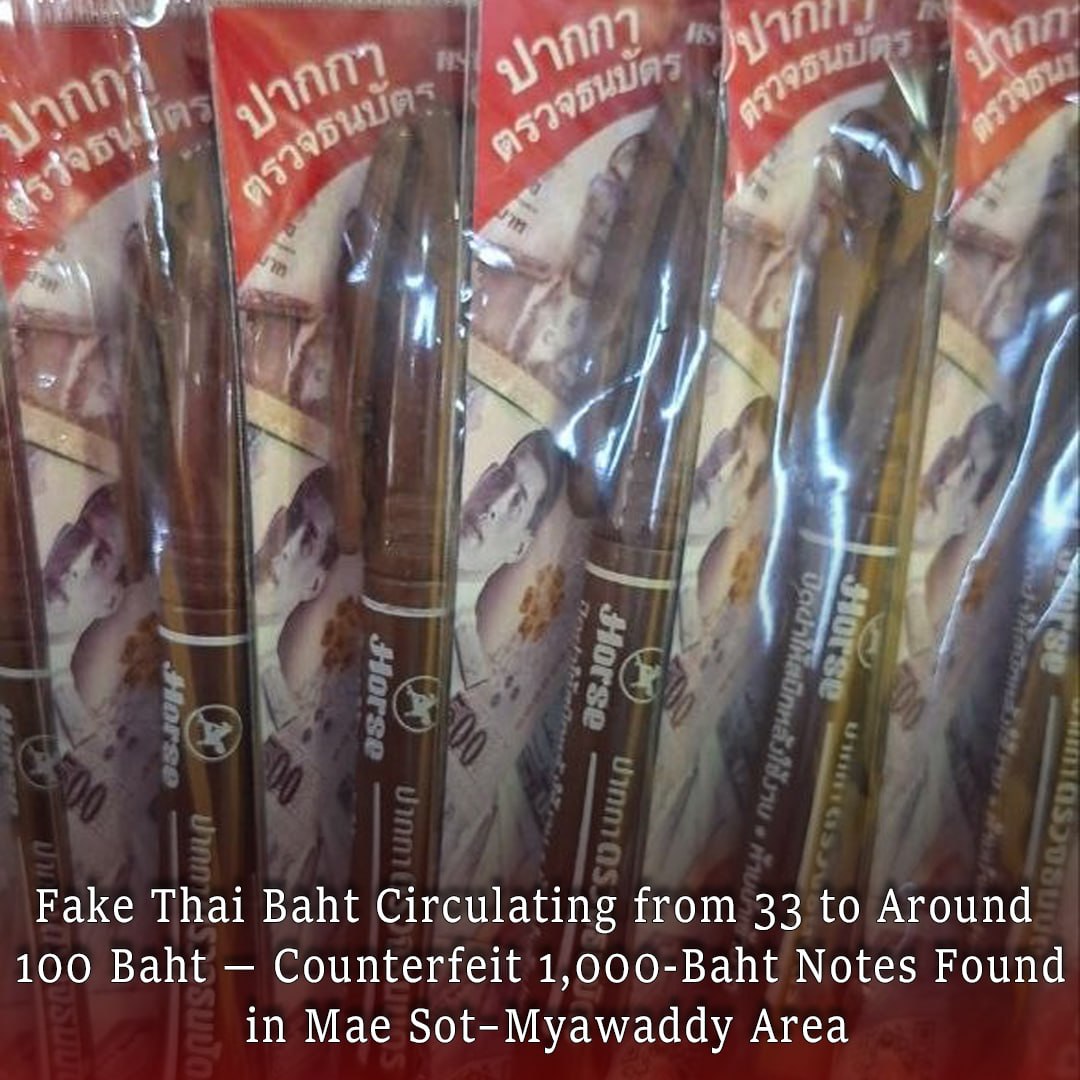
Reports in June 2026 say counterfeit Thai baht notes are being found around the Mae Sot–Myawaddy border area. Vendors and customers have noticed that the value of local (wholesale) baht bills used for exchange and trade has shifted: what used to sell for about 33 baht is now trading higher—recently reaching roughly 60 to about 100 baht per unit—while still circulating in markets.
Shopkeepers in Mae Sot and Myawaddy, including general stores and petrol stations, have begun inspecting bills after discovering counterfeit 1,000‑baht notes presented by customers. Social media has spread multiple reports of fake notes, and several retail businesses now check high‑value baht notes before completing transactions.
A Myawaddy store owner said counterfeit notes have become harder to tell by eye. Previously wholesalers in Mae Sot bought a bill at 33 baht and sold it in Myawaddy at 45 baht, but in recent days the price has climbed to about 100 baht. The seller added that only by feeling the paper and testing the security thread can they roughly distinguish fakes from genuine notes.
Despite social media reports and local businesses taking precautions, there has been no public advisory or formal warning issued yet by authorities in the Mae Sot area. Traders continue to accept baht notes but increasingly insist on examining 1,000‑baht notes before completing sales.
Residents and businesses are advised to inspect large‑denomination baht notes carefully — checking texture, watermarks, and security threads — and to report suspected counterfeits to local authorities.
Until an official statement or coordinated action is announced, vigilance by shopkeepers and customers remains the main defense against counterfeit currency in the border region.